
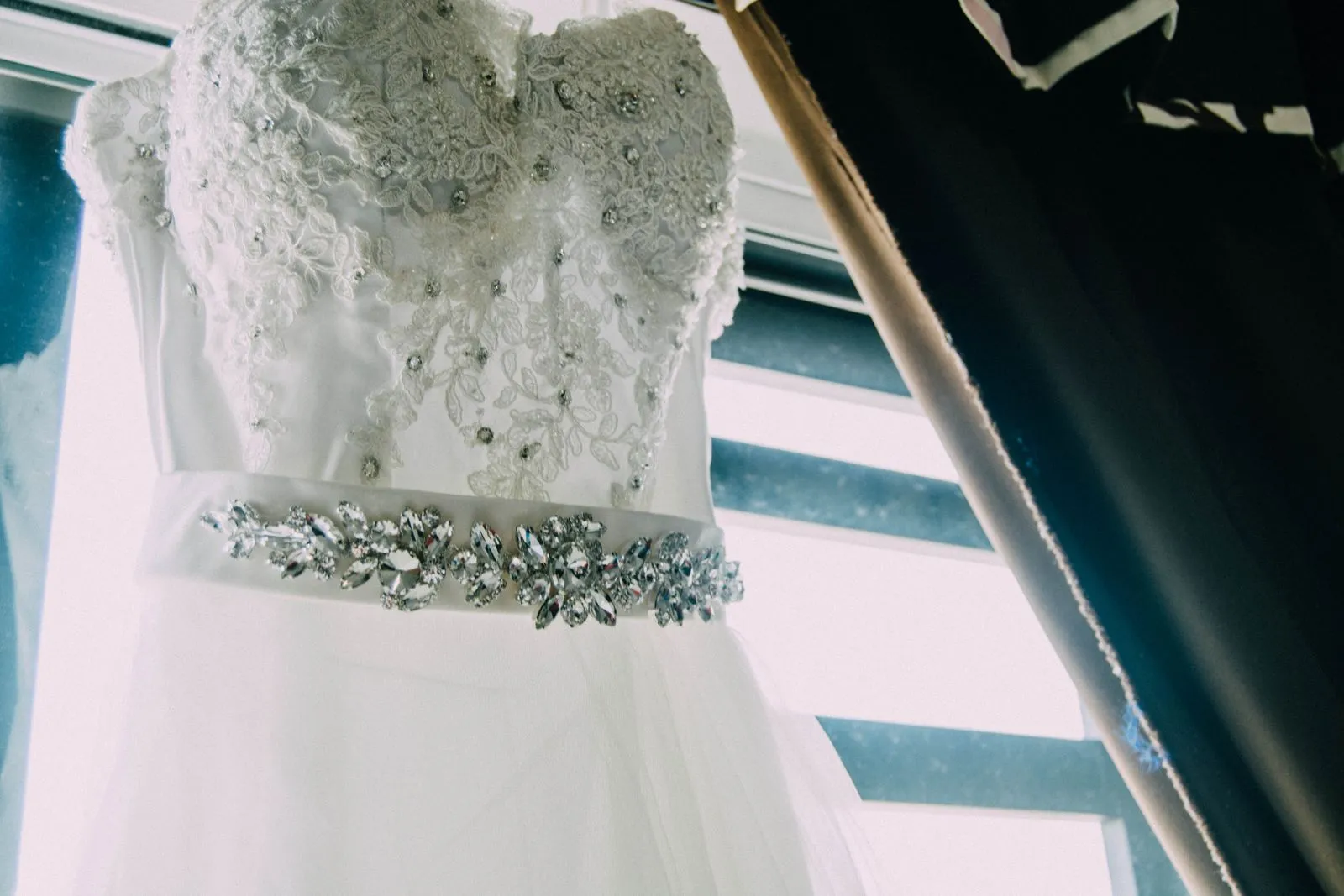
A custom wedding dress takes more than a great idea and a last-minute appointment. You’ll need time to shape the design, source materials, make the gown, and adjust the fit as your wedding approaches. Starting early gives you room to make thoughtful choices without rushing every decision. Use your wedding date as the anchor, then work backward to plan consultations, design approval, and fittings around your schedule, travel, and any other wedding-day outfits.
Start With Your Wedding Date
Begin planning as soon as you know your wedding date and have a general sense of your venue and celebration. These details can influence the dress: a beach ceremony may call for lighter fabric, while a formal evening event might inspire a structured silhouette. You don’t need a finished vision before meeting a designer. Bring a few references, note what you like or dislike, and stay open to options that suit the setting.
Ask the boutique how long its process typically takes, when its calendar fills, and how much time it recommends for your design. A custom gown’s schedule depends on the design, materials, maker’s workload, and number of fittings. Confirm the expected milestones before committing, and leave room for a final fitting and pickup well before the wedding. If your date is approaching, share it immediately so the designer can tell you what is realistic.
Allow Time for Design Decisions
Your first conversation is a chance to discuss shape, comfort, budget, and how you want to feel in the dress. Think about practical needs too: whether you’ll walk on sand, dance for hours, wear a particular undergarment, or need to move comfortably between ceremony and reception. Bring inspiration images, but explain what catches your eye in each one. That helps the designer translate a mood into details suited to you.
Once the concept takes shape, you may need to approve a sketch, select fabric, and settle details such as sleeves, neckline, closures, or embellishment. Some materials require extra time to locate or order, so ask about availability before finalizing the design. Make decisions promptly when the boutique requests approval, and get the agreed design and schedule in writing. Changes after materials are ordered or construction begins can affect both the timeline and the finished look.
Plan Fittings Around Your Calendar
Fittings help the maker check how the dress sits and moves, then refine the fit and finish. Ask how many appointments are planned and when they are likely to happen. Put them on your calendar early, especially if you live outside San Diego, have a busy work schedule, or expect to travel. Confirm what to bring, including the shoes and undergarments you expect to wear, so the dress can be assessed with the right proportions.
Your body can change between the first fitting and the wedding, so tell the designer about expected changes that could affect fit. Avoid making major alterations to your plans without checking how they might affect the gown. Schedule the final fitting close enough to the wedding to reflect the intended fit, but leave a buffer for any small adjustments. Also ask how the dress should be stored and transported after pickup.
Work Backward From Wedding Week
Set a target pickup date that gives you time to check the gown, arrange safe storage, and handle travel or packing. If you’re flying or changing locations, ask the boutique how to transport the dress and whether it should travel in a garment bag or box. Confirm how to steam or press it safely, and avoid trying a new cleaning or care method just before the event.
Keep your dress timeline connected to other wedding decisions. Share relevant changes to the venue, date, shoes, or undergarments with your designer as soon as possible. Save the boutique’s contact information and appointment notes in one place, and check in when a milestone is due. At Coastline Bridal in San Diego, a clear conversation about your date and priorities can help you map out the next steps.
The best time to start is early enough to make design choices carefully, complete fittings, and leave a cushion before wedding week. Begin with your date, ask the boutique for a realistic schedule, and keep appointments and approvals moving. If you’re ready to explore a custom gown, contact Coastline Bridal to discuss your timeline and ideas.